
WHAT IS A POST-TENSION SLAB?
A post-tension slab uses high-strength steel cables that are tensioned after the concrete reaches its required strength. This technique counteracts stresses and deflections, enhances structural performance, and allows for thinner slabs, longer spans, and cost efficiency through optimal use of concrete and steel.

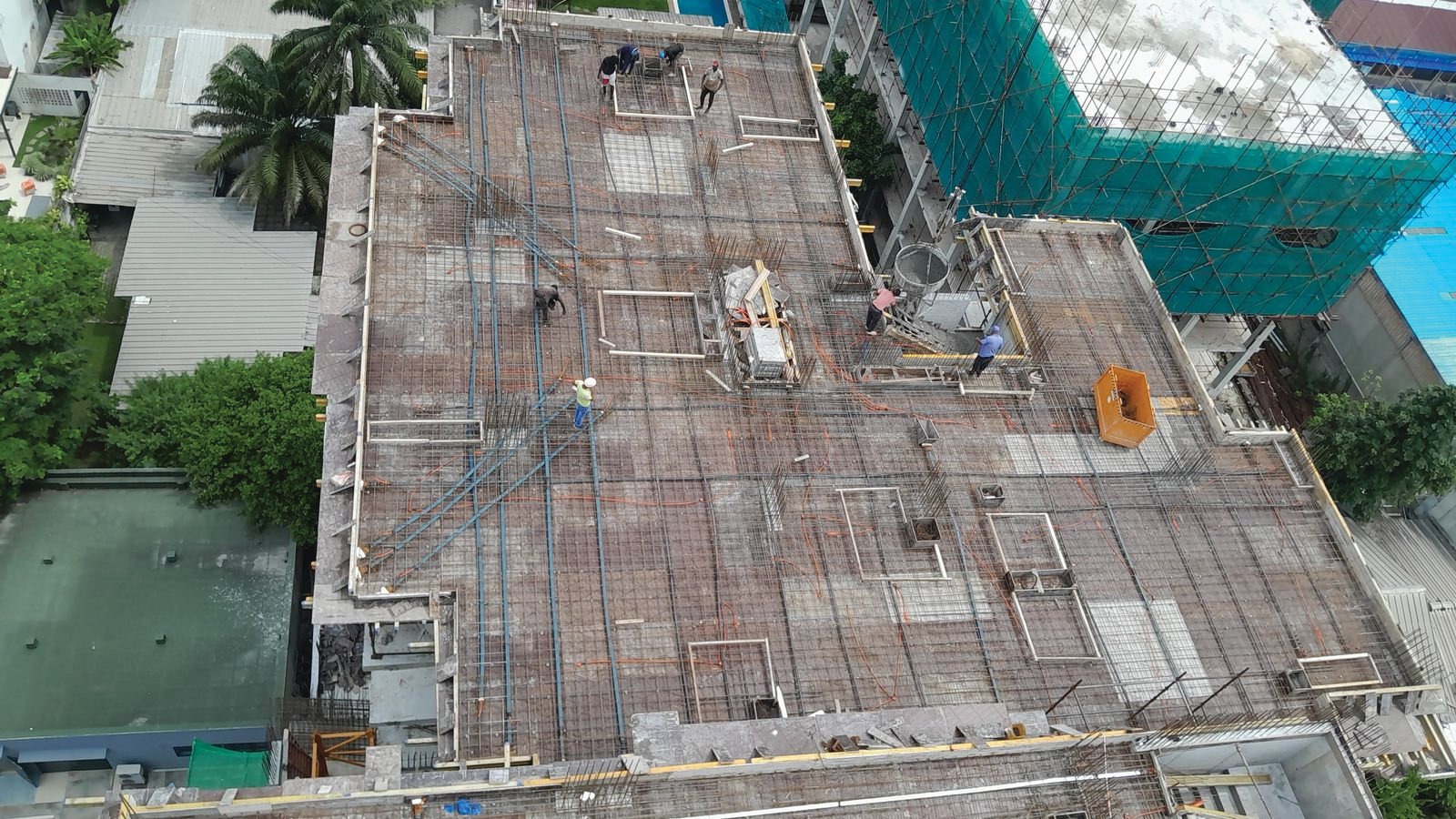
ADVANTAGES OF POST-TENSIONED SLABS
-
Thinner, lighter slabs with fewer supports
-
Reduced cracking and better structural performance
-
Faster construction with lower overall costs
-
Potential to add an extra floor in height-limited projects
OPENING TREATMENT IN A POST-TENSIONED SLAB
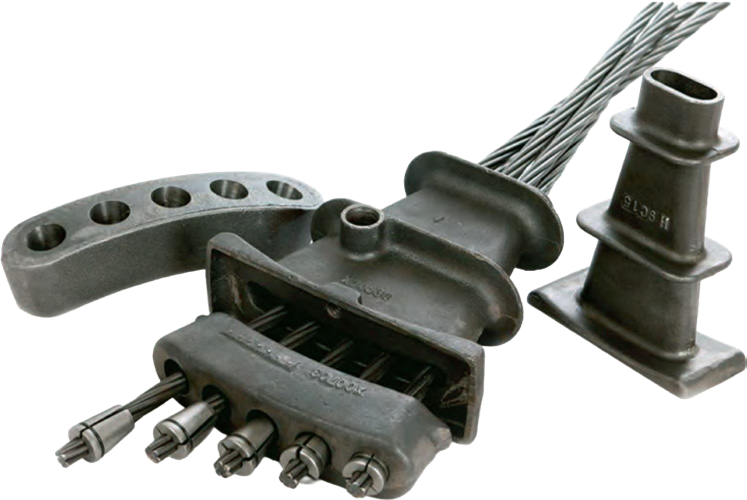
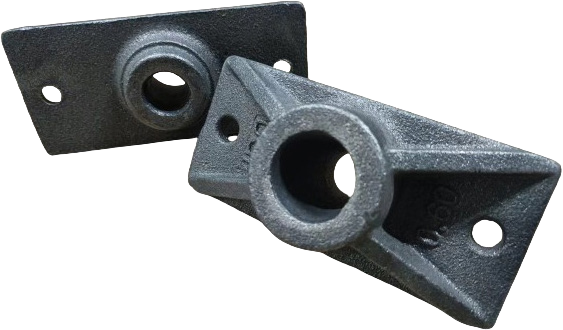
The layout and spacing of the cables allow for the creation of large areas where openings can be safely made later on. If it becomes necessary to cut through a cable, the injection of cement grout inside the duct — in the case of bonded post-tensioning — ensures proper load transfer through bonding, providing anchorage equivalent to that of passive reinforcement steel
FIRE RESISTANCE OF A POST-TENSIONED SLAB
The cable layout and the concrete cover over the prestressing
steel provide better fire resistance than that of a reinforced
concrete slab.
(The positioning of the ducts is set back from the passive steel
reinforcements, with the tendons shifted toward the neutral
axis in curved areas of the ducts—supports and spans.)
As a solid slab continuous over several spans:
• The post-tensioned slab has a good capacity to absorb heat
(thermal inertia of a solid slab), which slows the temperature
rise in both the concrete and the steel;
• The reinforcements raised over the supports are also better
protected
POST-TENSION SYSTEMS
There are two types of post-tensioning:
Bonded Post-Tensioning:
-
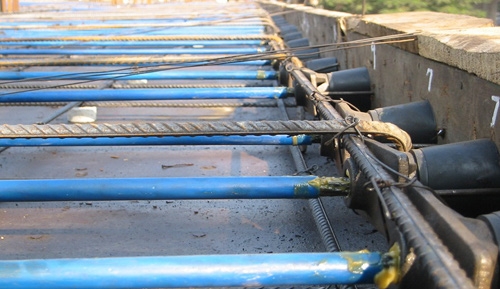
Uses metallic or plastic ducts containing one or more steel strands.
-
Includes active and passive anchorages for stressing the tendons.
-
Tendons are tensioned from one or both ends depending on cable length.
-
After stressing, ducts are pressure-grouted to provide permanent protection and bond between tendon and concrete.
POST-TENSION SYSTEMS
Unbonded Post-Tensioning:
-
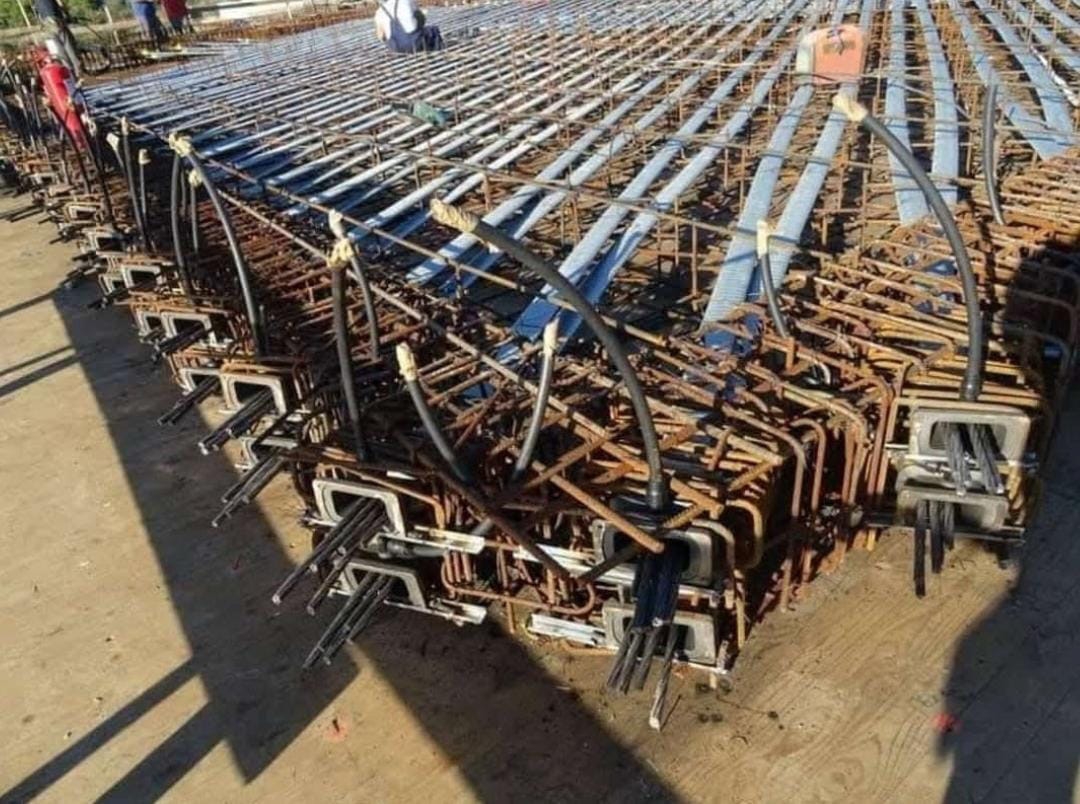
A lubricated steel strand placed inside an HDPE sheath during factory production
-
Active or passive anchorages similar to bonded systems
-
Permanent protection provided by the HDPE sheath and factory-applied lubricant
BONDED POST-TENSION VS. UNBONDED POST-TENSION
Vestibulum euismod nisl suscipit ligula volutpat, a feugiat urna maximus. Cras massa nibh, tincidunt ut eros a, vulputate consequat odio.
BONDED POST-TENSION
• Provides a higher level of fire protection.
• Ensures cable re-anchoring in case openings are made later,
thanks to the self-bonding of the grout.
• Allows full utilization of the steel’s capacity at ultimate strength.
• Enables a greater reduction in passive steel reinforcement.
UNBONDED POST-TENSION
• Simplifies on-site operations (no threading of strands into ducts).
• Does not require grouting after stressing